What if selling online through platforms like Amazon or Meesho increases your business opportunities—but also brings mandatory GST compliance that many new sellers overlook?
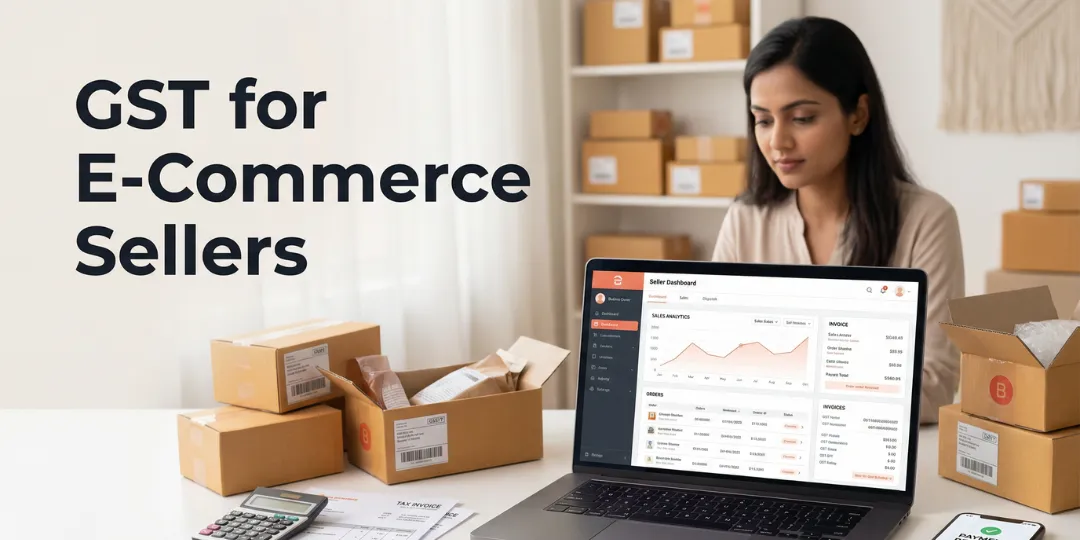
India’s e-commerce sector has grown rapidly over the last few years. Thousands of small businesses, resellers, manufacturers, and entrepreneurs now sell products through online marketplaces such as Amazon, Meesho, Flipkart, and other digital platforms. While these platforms provide access to a wider customer base, they also bring specific taxation and compliance responsibilities under GST.
Understanding the Impact of GST on E-commerce Sellers (Meesho, Amazon, etc.) is essential for anyone planning to sell online. Whether the seller operates as a sole proprietor, partnership, LLP, or under Private Limited Company Registration India, GST compliance has become a major part of online business operations.
Growth of E-commerce Business in India
Online marketplaces have made it easier for businesses to sell products across India without opening physical stores.
Platforms such as Meesho and Amazon allow businesses to reach customers in multiple states, manage logistics, and expand operations digitally.
This growth has also increased the importance of GST Registration because e-commerce transactions are closely monitored under GST law.
Why GST is Important for E-commerce Sellers?
GST applies to online sellers because e-commerce transactions involve taxable supply of goods or services.
Unlike many traditional businesses where GST registration may depend mainly on turnover, e-commerce sellers often fall under mandatory GST registration requirements regardless of turnover limits in many cases.
This makes GST Registration Online an important first step for online sellers.
Mandatory GST Registration for E-commerce Sellers
One of the biggest impacts of GST on e-commerce sellers is compulsory registration.
Businesses selling through online marketplaces are generally required to obtain GST registration even if their turnover is below standard exemption limits in many cases.
This rule applies to sellers operating through platforms such as:
- Amazon
- Meesho
- Flipkart
- Other e-commerce portals
As a result, small online sellers must comply with GST from the beginning of operations.
GSTIN Requirement for Selling on Platforms
Most major e-commerce platforms require sellers to provide GSTIN during onboarding.
Without GST registration, sellers may face restrictions in listing taxable products or completing account verification.
This makes GST Registration essential for smooth marketplace operations.
Tax Collection at Source (TCS)
Under GST provisions, e-commerce operators may collect Tax Collected at Source (TCS) on behalf of sellers.
This means marketplaces deduct a certain percentage from seller payments and deposit it with the government.
Sellers must reconcile these deductions while filing GST returns.
TCS compliance has added another layer of taxation management for online sellers.
GST Return Filing for E-commerce Sellers
Online sellers must regularly complete:
- GST Return Filing
- GST Return Filing Online
Since e-commerce transactions involve multiple invoices and platform reports, return filing can become more detailed compared to traditional local businesses.
Accurate reconciliation between platform sales data and GST returns is important.
Inter-State Supply and GST
Most e-commerce sellers supply goods to customers across multiple states.
Such transactions are treated as inter-state supplies under GST, and Integrated GST (IGST) generally applies.
This increases compliance responsibilities for online sellers operating nationwide.
Impact on Pricing and Profit Margins
GST directly affects product pricing for e-commerce businesses.
Sellers must factor GST into product cost, marketplace commission, logistics expenses, and customer pricing.
Incorrect tax calculation may reduce profitability or create compliance issues later.
Understanding GST impact helps businesses price products more effectively.
Input Tax Credit Benefits
One advantage of GST registration for e-commerce sellers is the ability to claim Input Tax Credit (ITC).
Sellers may claim credit on eligible business expenses such as:
- Packaging materials
- Advertising costs
- Software subscriptions
- Warehouse expenses
- Professional services
Proper ITC management helps reduce overall tax liability.
Compliance Burden for Small Sellers
While online selling creates business opportunities, GST compliance can be challenging for small businesses.
Managing invoices, return filing, reconciliation, and TCS adjustments requires proper accounting and record maintenance.
Many first-time sellers underestimate these responsibilities.
GST and Different Business Structures
E-commerce sellers may operate under different business models such as:
- Proprietorship
- Partnership
- LLP Registration India
- Private Limited Company Registration
Regardless of structure, GST obligations remain applicable based on e-commerce activity.
However, businesses operating under structured entities such as private limited companies often manage scaling and compliance more systematically.
Role of GST Billing Software
Online sellers dealing with multiple transactions often use GST billing software to manage compliance.
Such software helps with:
- Invoice generation
- Tax calculation
- Sales tracking
- GST reconciliation
- Return preparation
Automation reduces manual errors and improves operational efficiency.
Common GST Mistakes E-commerce Sellers Make
Many online sellers face problems due to avoidable mistakes such as:
- Incorrect GST rates
- Failure to reconcile platform reports
- Delayed GST filing
- Improper invoice management
- Ignoring TCS reconciliation
These issues may lead to notices, penalties, or blocked input tax credit.
Importance of Proper Accounting
E-commerce businesses generate large volumes of transaction data.
Proper accounting is essential for managing GST, inventory, commissions, refunds, and tax reconciliation.
This also supports:
- Income Tax Return Filing
- ITR Filing
- TDS Return Filing
Many sellers use Accounting & CA Services for structured compliance management.
GST and Business Expansion
GST registration allows online sellers to expand operations across India more efficiently.
Businesses can supply products to customers in different states while maintaining tax compliance.
This has encouraged many small sellers to transition into formal business structures under Company Registration in India.
E-commerce Sellers and Brand Building
As online businesses grow, branding becomes increasingly important.
Many sellers eventually consider:
- Trademark Registration
- Trademark Registration India
- Brand Name Registration India
Strong branding combined with proper GST compliance supports long-term business growth.
Employee and Operational Compliance
As e-commerce businesses scale, additional compliance obligations may arise.
Businesses hiring staff may require:
- ESI PF Registration
Warehouse operations and logistics expansion may also create additional regulatory responsibilities.
Role of Professional Guidance
GST compliance for e-commerce sellers can become complex because of inter-state transactions, TCS, and high transaction volumes.
Many sellers consult a Tax Consultant India for assistance with GST filing, reconciliation, and tax planning.
Professional support helps businesses avoid costly errors.
Conclusion
Understanding the Impact of GST on E-commerce Sellers (Meesho, Amazon, etc.) is essential for anyone entering the online selling ecosystem.
GST has made taxation more structured and transparent for digital commerce, but it has also increased compliance responsibilities for sellers.
Mandatory GST Registration, proper invoicing, GST Return Filing, TCS reconciliation, and accurate accounting are all important parts of running a compliant e-commerce business.
Along with GST compliance, businesses should also focus on structured growth through proper Company Registration in India, Private Limited Company Registration India, and related compliance obligations such as ESI PF Registration where applicable.
A strong compliance foundation helps e-commerce sellers grow confidently in India’s expanding digital marketplace.
Disclaimer: This article is for general informational purposes only and should not be considered professional or legal advice. Readers are advised to consult a qualified professional for guidance specific to their business requirements.