What if your business growth slows down—not because of lack of customers, but because basic banking formalities become difficult without proper business registrations?
Opening a current account is one of the most important steps for any business operating in India. Whether it is a startup, small business, trader, service provider, or growing company, a current account helps manage business transactions professionally and separately from personal finances. However, banks generally require proper business documentation before approving a business current account.
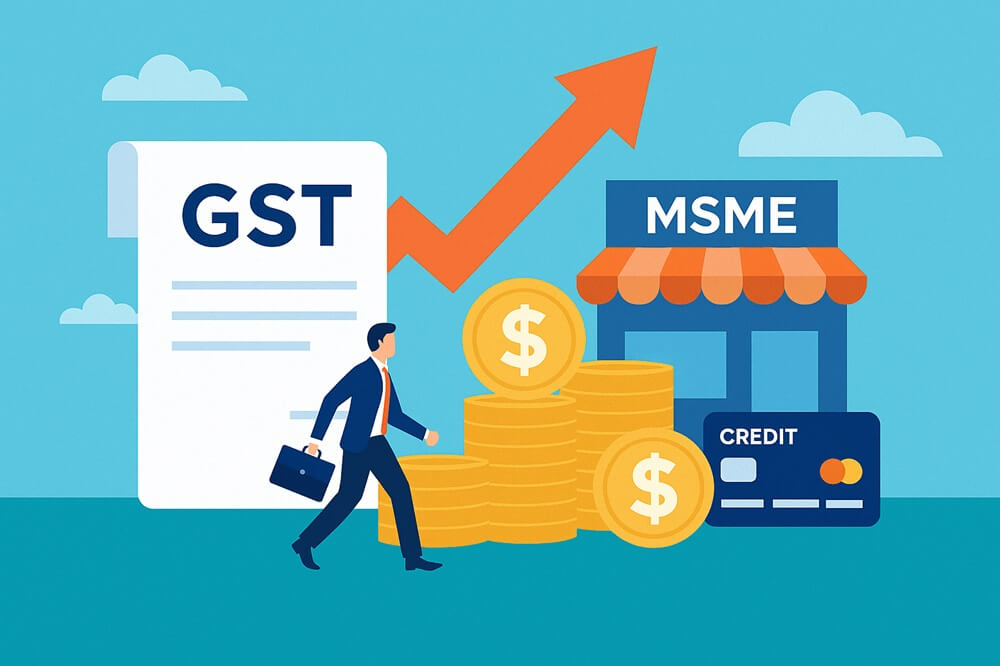
This is where registrations such as GST Registration and MSME Registration become highly important. Understanding How GST and MSME Registration Help in Opening a Current Account can help entrepreneurs complete banking formalities more smoothly and establish a stronger business identity.
Whether a business operates as a proprietorship, partnership, LLP, or through Private Limited Company Registration India, proper registrations improve credibility and support structured financial operations.
Why a Current Account is Important for Businesses ?
A current account is specifically designed for business transactions.
Unlike savings accounts, current accounts support:
- Frequent business transactions
- Vendor payments
- Customer collections
- Online payment systems
- Business banking facilities
For businesses operating after Company Registration in India, maintaining a separate current account helps improve financial organization and accounting transparency.
A dedicated business account also supports compliance, taxation, and professional business operations.
Why Banks Ask for Business Registrations ?
Banks need proof that the business is legally operating and properly recognized under applicable regulations.
This helps banks verify:
- Business identity
- Nature of operations
- Ownership structure
- Compliance status
- Financial legitimacy
Registrations such as GST and MSME provide formal evidence that the business exists and operates within a recognized compliance framework.
What is GST Registration?
GST Registration is the process through which a business becomes officially registered under the Goods and Services Tax system in India.
After registration, the business receives a GSTIN, which acts as an official tax identification number.
Businesses completing GST Registration Online become part of the formal taxation system and can issue GST invoices, file tax returns, and claim Input Tax Credit where applicable.
How GST Registration Helps in Opening a Current Account
Acts as Proof of Business Activity
GST registration serves as strong evidence that the business is actively engaged in commercial operations.
Banks often consider GST registration an important document while verifying business legitimacy.
This is especially useful for startups and small businesses that may not yet have extensive financial history.
Supports Business Address Verification
The GST registration certificate contains the registered business address.
Banks may use this document to verify the operational location of the business during current account opening procedures.
Accurate address verification improves banking documentation quality.
Improves Business Credibility
A GST-registered business generally appears more structured and compliant.
Banks may view businesses with GST compliance more positively because they are part of the formal taxation system.
This can support smoother banking approval processes.
Helps in Transaction Transparency
Businesses maintaining proper:
- GST Return Filing
- GST Return Filing Online
- Invoice records
often demonstrate stronger financial discipline.
Banks may review financial consistency and transaction patterns while assessing business accounts and future banking relationships.
What is MSME Registration?
MSME Registration, also known as MSME Udyam Registration, is official recognition granted to Micro, Small, and Medium Enterprises under government MSME regulations.
The registration helps businesses gain formal recognition and access to various government-related benefits and support systems.
Businesses registered under Private Limited Company Registration, proprietorships, partnerships, and LLPs may apply for MSME registration if eligible.
How MSME Registration Helps in Opening a Current Account ?
Provides Additional Proof of Business Legitimacy
MSME registration confirms that the business is recognized under the MSME framework.
Banks often consider MSME certificates as supporting evidence of genuine business operations.
This improves documentation strength during account opening.
Supports Business Categorization
The MSME certificate contains details related to the nature and classification of the business.
This helps banks better understand the scale and category of operations.
Structured documentation improves banking verification processes.
Improves Banking Credibility for Small Businesses
Small businesses often face difficulty proving business stability during early stages.
MSME registration helps create a more professional image and demonstrates that the business has completed formal recognition procedures.
This may positively support banking relationships.
Useful for Loan and Credit Discussions
Businesses with MSME registration may later explore business loans, overdraft facilities, or working capital support.
Having MSME recognition already linked with the current account may support smoother financial discussions in the future.
Importance of Proper Business Structure
Businesses operating under formal structures such as:
- Private Limited Company Registration India
- LLP Registration India
often find it easier to complete banking formalities because their legal structure and compliance records are more organized.
Formal structures also improve long-term operational credibility.
Common Documents Required for Current Account Opening
Although requirements vary between banks, commonly required documents include:
- PAN card of business
- Business registration certificate
- GST registration certificate
- MSME certificate
- Address proof
- Identity proof of directors or proprietors
- Photographs
- Bank KYC documents
Proper documentation helps speed up the account opening process.
GST, MSME, and Financial Transparency
Businesses maintaining proper GST and MSME compliance often demonstrate stronger financial discipline.
This supports:
- Better accounting systems
- Transparent business operations
- Improved banking credibility
- Easier transaction tracking
Banks generally prefer businesses with organized compliance records.
Importance of Accounting Records
Businesses opening current accounts should maintain accurate accounting systems from the beginning.
Proper financial management supports:
- Tax compliance
- Banking transactions
- Vendor management
- Loan eligibility
- Business reporting
Many businesses use Accounting & CA Services for organized bookkeeping and compliance management.
Relationship with Other Business Compliances
GST and MSME registrations are part of a broader business compliance framework.
Businesses may also require:
- Income Tax Return Filing
- ITR Filing
- TDS Return Filing
- ROC Annual Compliance
- ESI PF Registration where employee thresholds apply
Integrated compliance systems improve overall business stability.
Common Mistakes Businesses Make
Many businesses delay GST or MSME registration until they urgently require banking services.
Others maintain inconsistent records between registrations and banking documents.
Incorrect addresses, mismatched business names, or incomplete documentation may delay account approval.
Proper documentation management helps avoid such issues.
Importance for Startups and New Businesses
New businesses often struggle to establish financial credibility during the early stages.
GST and MSME registrations help startups build a more formal business identity even before achieving large turnover levels.
This becomes especially useful during vendor onboarding and banking relationships.
Role of Professional Guidance
Businesses often consult a Tax Consultant India or compliance professional while completing GST, MSME, and banking documentation.
Professional guidance helps ensure:
- Correct registrations
- Accurate documentation
- Compliance consistency
- Smooth banking procedures
This reduces operational delays and compliance errors.
GST and MSME Registration Support Business Growth
Beyond banking benefits, GST and MSME registrations help businesses operate within the formal economy.
They support:
- Structured accounting
- Tax compliance
- Business credibility
- Funding opportunities
- Operational transparency
These factors become increasingly important as businesses scale.
Conclusion
Understanding How GST and MSME Registration Help in Opening a Current Account is important for businesses planning professional and structured operations in India.
GST registration helps establish tax compliance and business legitimacy, while MSME registration strengthens business recognition and credibility. Together, these registrations improve documentation quality and support smoother current account opening procedures.
Whether operating after Company Registration in India or under Private Limited Company Registration India, businesses should maintain proper compliance records, organized accounting systems, and updated registrations for long-term operational stability.
Along with GST and MSME compliance, businesses should also focus on Income Tax Return Filing, ROC Annual Compliance, and ESI PF Registration where applicable to build a strong and legally compliant business foundation.
Disclaimer: This article is for general informational purposes only and should not be considered professional or legal advice. Readers are advised to consult a qualified professional for guidance specific to their business requirements.